Palazzo d’Accursio
M: Son of the CenturyPalazzo d’Accursio is Bologna’s historic seat of civic power and the setting for a decisive confrontation in November 1920. During the inauguration of a socialist municipal council, the building and the square before it become entangled in armed political violence; in the aftermath, the elected council resigns and Bologna passes under a commissioner appointed by the prefect.
Setting and Civic Role
A crenellated building beside the Basilica of San Petronio, Palazzo d’Accursio overlooks Piazza Maggiore. Its civic authority predates the crisis: it had served as the seat of power under both senatorial and municipal government. On November 21, 1920, processions of socialist delegates began arriving at about two in the afternoon for the council’s inaugural session. Their numbers, a couple of thousand, were limited under an agreement with the police. Authorities had barricaded the piazza, closed its entrances from Via Rizzoli and Via Indipendenza, and secured the perimeter with a cordon of carabinieri.
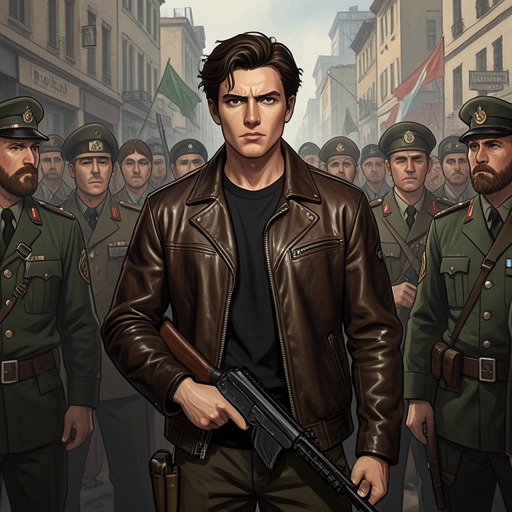
The building’s different spaces shaped the unfolding confrontation. About fifty royal guards watched the courtyard entrance; armed socialist guards appeared on the balconies, while the chamber prepared to receive the new council. Outside, thousands of socialists gathered around the Neptune fountain, and a small group of Fascists was already inside the piazza. This arrangement placed a public civic ceremony amid opposing crowds and armed forces, with the palace’s entrances, courtyard, balconies, and windows becoming consequential points in the crisis.
Inauguration and Crossfire
The precautions did not prevent the confrontation. Although the police agreement restricted the socialist procession, a red flag appeared on the Torre degli Asinelli at 2:30 p.m. Fascists led by Leandro Arpinati then left their headquarters on Via Marsala and approached in squads; a small group entered the piazza through an opening made for cavalry. At three, the council session began inside Palazzo d’Accursio. The new mayor, Enio Gnudi, a railway worker and communist, delivered his inaugural address and paid tribute to the Russian Revolution. Half an hour later he leaned from the balcony of the Red Room to greet the crowd among the red flags. He released doves, some carrying small red flags on their tails, into the space shared by the opposing groups. A shot from the Restaurant Grande Italia ended the ceremony’s brief calm.
The gunfire drew the piazza into crossfire. A group of twenty-six Fascists from Ferrara broke through the cordon with clubs; shots came from the restaurant, the palace balconies, and the Neptune fountain. As people fled toward the palace courtyard, guards on the balconies mistook those seeking shelter for attackers and threw five grenades. Inside the council chamber, members heard the detonations and saw the fallen through the windows, but did not know how the deaths had occurred. Amid the confusion, an unidentified socialist militant fired at the nationalist councillors. Giulio Giordani, a former soldier and councillor who was not a Fascist in life, was killed; two other councillors were wounded. The palace’s civic chamber had become part of the same armed conflict as its courtyard and the surrounding piazza.
Aftermath and Political Consequences
Accounts of Leandro Arpinati’s role in the attack remained contradictory: some said he incited the Fascists from beside the statue of Neptune; others claimed he entered the palace courtyard with a gun. The narrative distinguishes these rumors from the confirmed toll: ten people were dead and fifty wounded. The crisis also damaged the credibility of the Socialist Party’s armed organization and its broader reputation. Arrests and scandal overwhelmed the democratically elected council, whose members resigned en masse; a commissioner appointed by the prefect took over Bologna’s government.
The effects extended beyond the immediate loss of municipal authority. The day after the bloodshed, Fascists assembled in the streets, and thousands joined them within days. Benito Mussolini sent Cesare Rossi and Celso Morisi from Milan to coordinate the formation of squads. At Giordani’s funeral procession on November 23, Fascists marched in formation carrying the city flag while Socialists were absent. The building’s inauguration-day violence thus became a turning point: the civic seat where a newly elected council had begun its work was followed by the collapse of that council and an accelerating Fascist advance.
Security and the Limits of Control
The confrontation had been anticipated before the council gathered. In Parliament, Socialist deputy Niccolai denounced the spread of Fascist violence, while the press offered opposing accounts of responsibility: Avanti! accused the government of collusion, and the Corriere della Sera described public opinion as welcoming a reaction to Socialist abuses. In the days before the inauguration, rumors circulated that socialists had stored crates of bombs in Palazzo d’Accursio. The prefect and police chief knew that a spark might set off the conflict, and police chief Poli went in person to the Fascist headquarters on Via Marsala to negotiate terms.
The resulting agreement tried to regulate the symbols and timing of the ceremony: the Fascists would not attack unless the great bell rang, and the red flag was to appear only at the end of the session, when the mayor could display it as a party flag. At the same time, authorities called in reinforcements. On November 21, reports recorded 900 infantrymen, 200 cavalry, 800 carabinieri, and 600 royal guards converging on the historic center, alongside the 400 royal guards already available. The extensive deployment and the negotiated rules could not secure the ceremony. The palace’s place at the center of civic authority instead made its inauguration a public test of whether the state could contain the armed forces gathering around it.